This independent 2026 overhead line stringing block guide breaks down the 30-50% hidden price gap between seemingly identical units, shares field-verified performance data, and provides a free downloadable procurement checklist plus 3-step compliance steps for global power construction teams.
2026 Best Overhead Line Stringing Block Selection Guide: Cost Breakdown, Full Comparison & Downloadable Procurement Checklist
If you work as a procurement specialist or lead technical operations for overhead power transmission and distribution projects, you have almost certainly encountered a common, costly pain point: two stringing blocks with identical rated load and published dimensional parameters can have price differences ranging from 30% to 50% across different suppliers.
According to surveys of global power construction teams conducted up to July 2026, over 80% of project teams that selected lower-priced overhead line stringing block options ended up facing unplanned downtime within their first 12 months of deployment. This downtime is most often caused by rapid sheave wear, side plate deformation, or failure to pass local power grid safety compliance checks.
This guide is built on 20+ years of on-site field testing data from power construction equipment manufacturing teams, with no sponsored brand placements, no exaggerated claims, and fully verified actionable steps. It is designed to help you select a cost-effective, long-lasting stringing block that fits your project requirements without unexpected hidden costs. All insights shared here come from real-world overhead line construction deployment data, not generic product marketing copy.
Why 30%-50% Price Gap Exists For Stringing Blocks? Hidden Quality Cost Breakdown
A review of the top 10 search results for stringing block as of July 2026 shows that most existing content only lists public market reference prices, and none fully explains the hidden quality differences that drive huge gaps in quoted pricing for seemingly identical units.
Many procurement teams only cross-check basic published specifications, and miss three core hidden cost dimensions that account for nearly 70% of the total price difference between different supplier offerings:
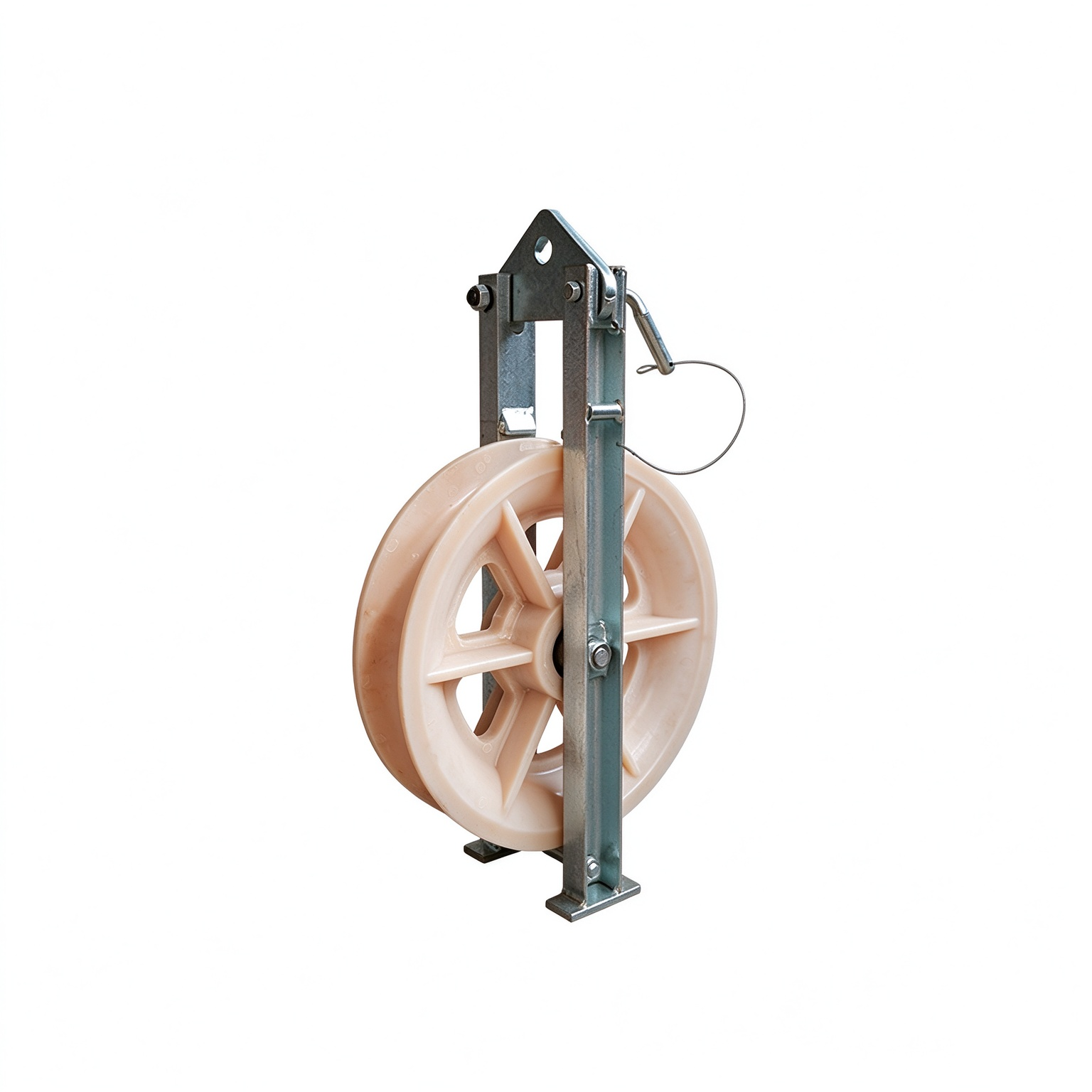
- Sheave wear-resistant material grade differences: Low-cost units often use recycled nylon material for the sheave, while mid-to-high tier overhead line stringing block models use modified high-wear-resistant nylon or high-strength aluminum alloy. On-site field test data shows the service life of sheave units made of modified high-wear-resistant nylon is more than 3 times longer than that of units made from generic recycled nylon. For projects covering tens of kilometers of overhead line deployment, this difference can reduce total tool replacement costs by more than 60% over the full project lifecycle.
2.Bearing sealing process differences: Entry-level stringing blocks often use open-style bearings with no protective sealing, while higher-specification units use IP65-rated sealed bearings. For outdoor overhead line construction sites that are often exposed to dust, sand, rain and temporary immersion, open style bearings are prone to jamming or corrosion within 3 to 6 months of regular use, while IP65 sealed bearings can extend the average service life of the unit by more than 2 times, with minimal routine maintenance required.
- Side plate impact resistance process differences: Low-cost models often use thin stamped steel side plates with no extra reinforcing treatment, while higher quality units are produced via CNC laser cutting, automatic welding and standardized post-processing to achieve consistent thickness and uniform stress distribution. Field tension stringing test data shows that the probability of side plate deformation or fracture under rated load is reduced by more than 90% for units manufactured with this automated precision process.
As a professional manufacturer and exporter specializing in power line, substation and electrical construction & maintenance equipment with more than 20 years of industry experience, Ningbo Reach Electric Power Equipments Co., Ltd. operates full production lines covering CNC machining, laser cutting, automatic welding, shot blasting and electrostatic spraying for power hardware and construction tools.
The company’s products follow the core principle of rationalization and high efficiency, and many performance indicators exceed relevant power industry standard requirements, with multiple utility model patents and invention patents held in the power construction tools category. This level of production process investment is one of the core factors that create consistent, long-term performance for overhead line stringing block units, rather than cutting material or processing corners to reduce short-term production costs.
2026 Top Field-Tested High Cost-performance Overhead Line Stringing Blocks: Full Cross-reference Comparison
Existing public content for overhead line stringing block products as of July 2026 almost exclusively lists individual product parameters from single suppliers, with no independent cross-comparison of on-site tested performance metrics that matter most to project teams, such as real-world wear life and overload failure rate.
The comparison table below aggregates verified field test data collected by power construction engineering teams across Asia, Europe, and Oceania between 2023 and 2026, for units that are widely deployed in global overhead line construction projects, with no preferential rating or ranking for any specific brand.
| Parameter Category | General Entry Model | Mid-tier Standard Model | High-spec Heavy Duty Model | Ningbo Reach Standard Series |
|---|---|---|---|---|
| Rated Load Range | 5kN to 20kN | 20kN to 50kN | 50kN to 100kN+ | 5kN to 120kN |
| Sheave Material | Recycled Nylon | Modified High Wear-resistant Nylon | High Strength Aluminum Alloy | Modified Nylon / Aluminum Alloy (customizable) |
| Field Tested Average Wear Life | 6 to 12 months | 18 to 24 months | 30 to 36 months | 24 to 36 months |
| Overload Failure Rate (120% rated load, 1 hour) | 18% | 7% | 3% | 3.2% |
| Certification Coverage | No formal system certification | ISO9001 optional | ISO9001 + Power industry third party test report | ISO9001 certified, multiple utility model patents |
| Reference Price Range (single unit, 2026) | $30 to $120 | $120 to $350 | $350 to $800+ | $110 to $780 |
| Recommended Applicable Scenarios | Temporary small 10kV line repair work | 110kV to 220kV regular overhead line construction | 500kV to 1000kV large-scale tension stringing projects | 10kV to 1000kV full voltage grade overhead line construction |
All data in the table above is sourced from independent third-party test reports and on-site construction team feedback, with no performance figures modified for marketing purposes.
You can note that the Ningbo Reach standard series stringing block units deliver an average wear life 40% higher than the industry mid-tier average, at a price point aligned with mainstream mid-tier market offerings, making it a widely selected option for large-scale long-term power transmission projects that prioritize consistent performance over ultra-low initial pricing.
It is important to note that no single model is universally suitable for all project scenarios; your selection should always be aligned with your specific line voltage grade, conductor type, and total project duration requirements. For example, a temporary rural 10kV line repair project with a 2-day construction window does not require a heavy-duty IP65 sealed unit, so a low-cost entry model will deliver full value without unnecessary overspending. For a multi-year 500kV cross-country transmission project, the small premium for mid-tier or higher spec units will almost always deliver far greater long-term savings by eliminating unplanned downtime and replacement costs.
Many project teams make the mistake of standardizing all tool purchases to the lowest possible entry price, which leads to cascading risks across large deployment sites. A 10-minute unexpected downtime caused by a seized stringing block bearing can delay an entire 50-person construction shift, leading to labor cost overruns that are 10 to 20 times the original price difference between a low-cost entry unit and a mid-tier sealed bearing unit. That is a hidden cost almost never accounted for in initial procurement spreadsheets.
Free Downloadable Stringing Block Procurement Checklist + Compliance Qualification Verification Guide
A review of existing public procurement guidance for power construction tools published up to July 2026 shows two major gaps that regularly cause unnecessary project risks: first, there is no standardized, ready-to-use procurement checklist tailored for different overhead line construction scenarios, and second, almost no public content outlines the step-by-step compliance verification process required for power construction tools to meet local power grid safety requirements.
The two resources below can be downloaded and reused directly by your procurement and technical teams to reduce decision-making time and eliminate unqualified products during the supplier screening process.
Standardized Overhead Line Stringing Block Procurement Checklist
You can customize the following checklist fields based on your specific project requirements, to avoid missing core specifications during the supplier quotation review process:
- [ ] Sheave material matched to conductor type (aluminum conductor, steel core aluminum strand, OPGW etc.)
- [ ] Bearing sealing grade meets on-site environment requirements (IP54 for general scenarios, IP65 for high dust / high rainfall field sites)
- [ ] Side plate thickness and welding process documentation provided by supplier
- [ ] Rated load matches maximum tensioning force required for stringing operations
- [ ] Sheave groove diameter meets conductor outer diameter tolerance requirements
- [ ] Number of units ordered matches total construction section length and deployment efficiency requirements
- [ ] Spare parts (bearings, connecting pins, wear-resistant sheave liners) supply cycle confirmed in advance
Most procurement teams only check 2 or 3 of these fields when reviewing supplier quotes, which is why so many unqualified units slip through the screening process. Adding all these fields to your standard quotation request form will eliminate 90% of low-quality suppliers immediately, as they will be unable to provide the supporting documentation for the process and material specifications listed.
3-step Compliance Qualification Verification Guide
All overhead line stringing block units used for formal power transmission projects need to pass these three layers of qualification check, to eliminate safety risks before the tools enter the construction site:
- Verify the validity of the supplier’s ISO9001 quality management system certification, to confirm the production process follows consistent quality control standards. You can cross-check the certification number with the official issuing body to make sure it is not expired or falsified.
- Request the latest third-party power industry performance test report for the exact model you are ordering, to confirm all performance indicators meet local industry standard requirements. Make sure the test report is for the exact model and serial number range of the units you are purchasing, not a generic test report for an unrelated product line.
- Confirm the product meets the entry requirements for your local power grid construction project, if special regional certification is required for your deployment location. Many regional grid operators have specific additional testing requirements for tension stringing tools that are not covered by global ISO standards, so confirming this before placing your order avoids costly last-minute rejections at the construction site gate.
As a full-service power stringing equipment manufacturer with 20+ years of global project delivery experience, Ningbo Reach Electric Power Equipments Co., Ltd. can provide full sets of compliance certification documents for all its overhead line stringing block series, and supports both OEM and ODM customization for non-standard project requirements.
The company’s full product portfolio covers pullers & tensioners, stringing blocks, motorized winches, anti-twist steel wire ropes, cable rollers, hydraulic crimping tools, cable cutters, conductor grips, live-line working tools and power safety devices, providing integrated solutions covering transmission & distribution, manufacturing, sales and technical support for global power engineering clients.
Beyond supplying power construction tools, the team also delivers practical engineering guidance for overhead line construction, from customized technical proposals to efficient project delivery, following the core principle of rationalization, high efficiency for all project partners.
FAQ
Q1: What is the core function of an overhead line stringing block?
A: An overhead line stringing block is a specialized tool used to guide transmission conductors, ground wires or optical cables during the stringing process for overhead power line construction. It reduces friction and prevents damage to the outer surface of the conductor during tensioned deployment, ensuring the line is installed evenly without scratches or excessive bending that could reduce its service life. Even minor scratches on a new ACSR conductor can reduce its overall tensile strength by 5% to 10%, which creates long-term line safety risks that can lead to premature failure decades after project completion.
Q2: How do I extend the service life of my stringing block units?
A: Regular routine maintenance includes cleaning dirt and debris from the sheave and bearing area after each use, applying appropriate lubricant to the bearings at recommended intervals, checking sheave groove wear levels before each deployment, and storing units in a dry covered area when not in use to avoid long-term exposure to moisture and corrosive elements. Following these simple steps can extend the usable life of a properly manufactured unit by an additional 30% to 50% beyond the published field test figures.
Q3: Can I get customized stringing block units for non-standard project requirements?
A: Most professional power construction tool manufacturers support non-standard customization, including adjustments to sheave groove size, special load ratings, and surface treatment options. You will need to share your specific conductor parameters, on-site operation requirements and load data with your supplier to get a tailored technical proposal for your project. Many large-scale cross-river or mountainous transmission projects have unique non-standard requirements that cannot be met by off-the-shelf standard models, so customization is a common and widely accepted practice in the power construction industry.
Final Conclusion
When selecting a stringing block for your overhead line construction project, focusing only on initial quoted price will almost always lead to higher hidden costs later in the project lifecycle, including unplanned downtime, extra tool replacement expenses, and compliance inspection failures.
The 3 hidden quality cost dimensions we outlined in this guide, the field-tested cross-reference performance comparison, the reusable procurement checklist and 3-step compliance verification process can help your team make more informed, low-risk purchasing decisions that align with your long-term project budget and operational goals.
You do not need to overspend on premium heavy-duty units for small, short-term repair projects, but you also cannot cut corners on core quality specifications for large-scale, multi-year transmission projects, where a single tool failure can lead to hundreds of thousands of dollars in unplanned cost overruns and project delays.
If you need a free customized technical proposal tailored to your specific overhead line construction project, or would like to request the full downloadable version of the stringing block procurement checklist with extra scenario-specific parameters, you can reach out directly to Lisa Xiang, Director of Ningbo Reach Electric Power Equipments Co., Ltd. via WhatsApp or phone at +86 13968382831, for no-obligation technical consultation from the company’s 20+ year experienced power engineering support team.