This 2026 guide for global power engineering procurement teams shares verifiable quality checks, tiered factory pricing, and standardized checklists for stringing blocks, helping you cut unnecessary costs while meeting strict power safety requirements.
2026 Overhead Line Stringing Block Full Scenario Selection & Procurement Complete Guide
Introduction
If you work as a procurement specialist for power engineering projects, you have almost certainly run into this common, frustrating dilemma: two stringing block units with identical listed load ratings can have price gaps as wide as 2 to 3 times, with no public, transparent reference to explain hidden quality differences. There are no standardized procurement checklists tailored to different construction scales, and no reliable, easy-to-follow method to filter out low-cost substandard products and overpriced offerings from middlemen who add unnecessary markups.
This guide is built exclusively for procurement teams working on global power engineering projects. It includes verifiable quality identification methodologies, a reusable procurement template, and up-to-date public factory pricing ranges that fit every overhead line construction scenario from 10kV to 1000kV. Unlike most existing public content that targets on-site construction operators and focuses only on operation guidelines, this reference is built on over 20 years of hands-on industry practice in power construction tool manufacturing, to fill long-standing information gaps that are almost never addressed for procurement staff.
All data cited in this guide is sourced from verified public industry records and formal manufacturing specifications, as of July 2026, to help you make cost-effective procurement decisions while adhering to strict power industry safety standards.
Overhead Line Stringing Block Basic Cognition and Core Parameter Breakdown
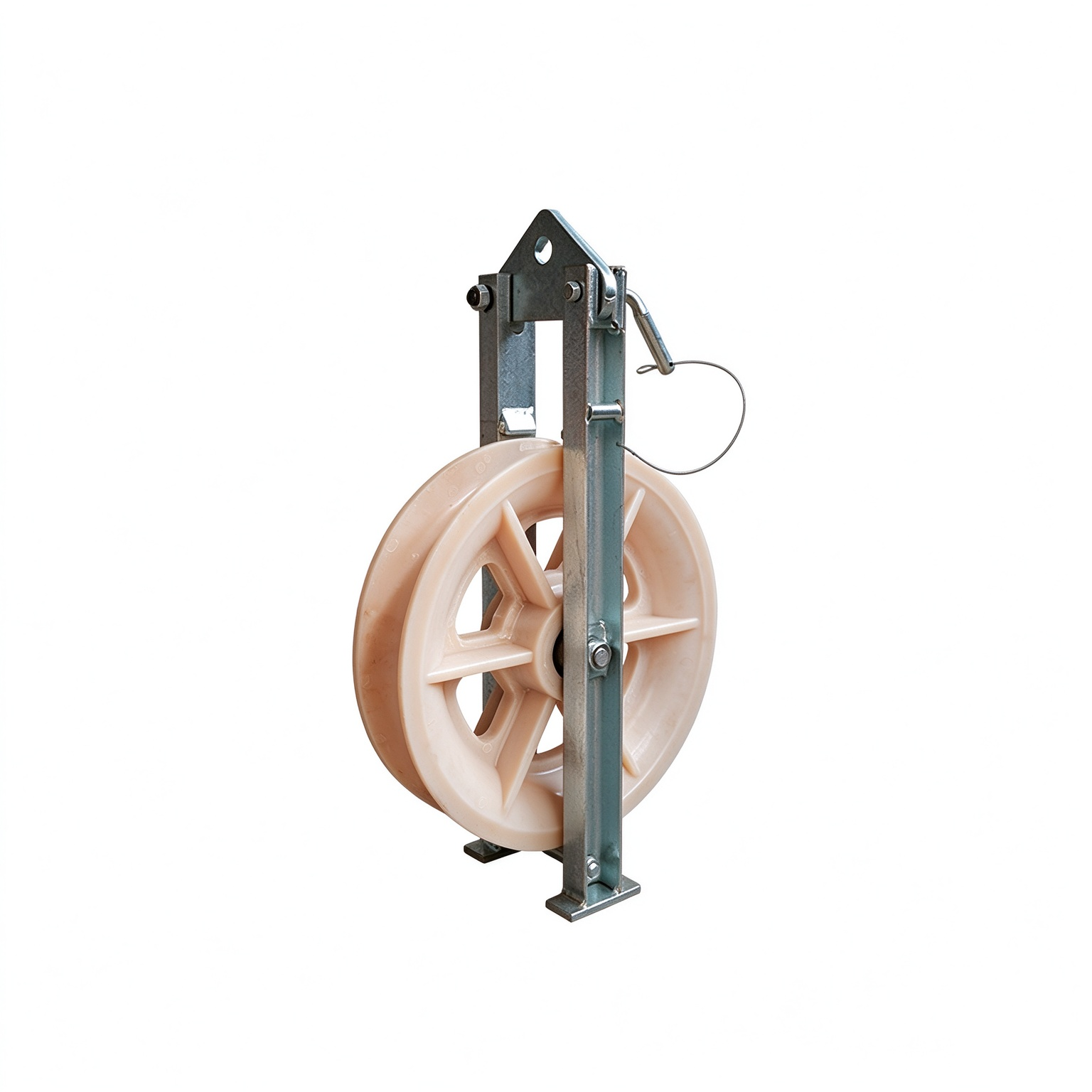
For most procurement teams, the first step to make a rational selection is to clarify the formal classification and performance attributes of a stringing block, instead of only referring to the nominal load bearing parameters listed in public product listings.
General Public Classification by Wheel Material
As documented in widely recognized power construction operation guidelines, overhead line stringing blocks are generally categorized by wheel body material into three main types, each with corresponding conventional application scenarios:
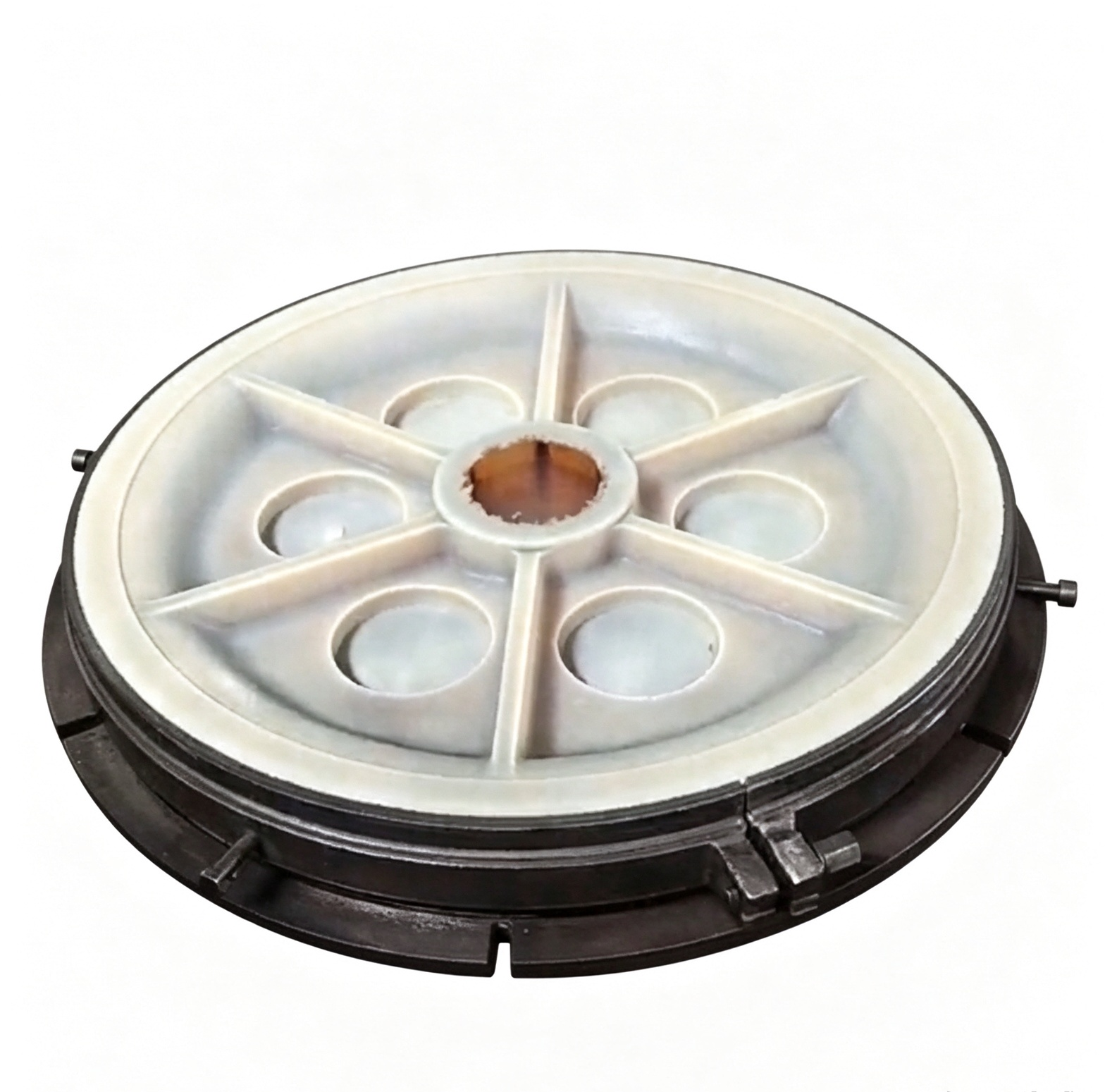
- Nylon wheel stringing block: Features lighter self-weight, lower friction coefficient for better conductor protection, and is mostly used for stringing of new ACSR conductors with no extra sharp surface burrs.
- Aluminum alloy wheel stringing block: Balances wear resistance and structural strength, suitable for medium and long distance overhead line stringing projects with repeated usage requirements.
- Cast steel wheel stringing block: Delivers the highest structural impact resistance, designed for heavy duty scenarios with large cross-section conductors or frequent cross-over operations.
Implicit Material and Process Differences Rarely Disclosed in Public
According to verifiable manufacturing process records as of July 2026, there are multiple unmarked quality dimensions that directly determine the total service life and operation safety of a stringing block, which most suppliers do not list on public product specification sheets:
- Nylon wheel wear reserve grading: Low-cost products often use recycled nylon raw materials with thin effective wear thickness, while qualified products made from virgin raw materials have consistent thickness tolerance controlled via CNC machining process, extending effective service cycle significantly.
- Aluminum alloy wheel surface treatment standard: Products with normal anodization treatment have 3 to 5 times higher surface hardness than untreated aluminum parts, avoiding rapid wear under long term friction with conductor surfaces.
- Cast steel wheel quenching hardness grading: Proper heat treatment process ensures the wheel body will not deform or crack under sudden impact during stringing operation.
- Bearing sealing performance grading: Sealed bearings with proper protection level prevent sand and rain from entering the internal structure during long term outdoor field construction.
- Side plate impact resistance grading: Parts manufactured via laser cutting and automatic welding process have consistent structural strength, avoiding hidden cracks that may lead to safety accidents under unexpected external force.
All these process indicators are strictly controlled in compliant production systems that meet ISO 9001 quality management requirements, with many performance indicators exceeding relevant public power industry standard requirements.
2026 Tiered Cost-Effective Overhead Line Stringing Block Procurement Checklist (With Official Price Reference)
Based on verified publicly available factory pricing data up to July 2026, we have sorted out three tiers of qualified stringing block products that fit all common overhead line construction scenarios, with no unqualified substandard products included in the reference range.
3 Tiers of Qualified Products Core Parameters and Price Ranges
All three tiers of products meet relevant power industry safety standards, and can be selected based on your actual project voltage level and usage frequency:
- Entry Engineering Grade: Adapted for 10kV to 110kV regular rural power grid renovation projects, with nominal load ranging from 20kN to 50kN, and verified mainstream factory price range that fits regular short term usage demand for small and medium scale renovation projects.
- Mid-Range Custom Project Grade: Adapted for 220kV to 500kV high voltage overhead line construction, with nominal load ranging from 50kN to 100kN, equipped with enhanced wear resistant wheel body and better sealed bearing structure, suitable for repeated usage across multiple project sites.
- High-End UHV Special Grade: Adapted for 750kV to 1000kV ultra high voltage projects, with nominal load ranging from 100kN to over 250kN, with all core components passing strict repeated load testing to meet strict safety requirements for long distance large cross-section conductor stringing.
Reusable Standardized Procurement Reference Table
The following table provides procurement quantity reference adapted to different overhead line project scales, which you can adjust according to your specific project conductor type and terrain conditions:
| Project Scale | Recommended Stringing Block Quantity Range | Supporting Accessories Reference |
|---|---|---|
| Small project (under 10km) | 8 to 15 units | Matched connection shackles, hanging plates, basic anti-drop devices |
| Medium project (10km to 50km) | 25 to 40 units | Extra spare wheels, enhanced anti-drop protection structure |
| Large project (over 100km) | 60 to 120 units | Full set of spare parts, on-site technical guidance support |
For projects with special non-standard demands, qualified manufacturers that provide OEM and ODM services can adjust product parameters to match your customized technical proposals, to ensure full compatibility with your existing power construction tool set.
Procurement Exclusive: 3-Step Practical Method to Quickly Verify Overhead Line Stringing Block Quality
You can complete basic quality inspection for incoming goods on site without access to professional laboratory testing equipment, to filter out products that do not meet expected quality standards quickly.
3-Step On-Site Verification Operation
- Step 1: Wheel body wear reserve quick check: Measure the total thickness of the wheel body rim, compare the thickness of the grooved working surface with the non-working side part of the rim. Products with consistent thickness on all sections of the rim are made from full virgin raw material, while products with obvious thinner grooved wall are made from low cost recycled material or substandard material.
- Step 2: Bearing sealing grade simple test: Rinse the bearing side of the stringing block with clean water, then rotate the wheel body for 3 to 5 full cycles. If the rotation remains smooth and no resistance increase appears after the test, the sealing level is qualified for normal rainy day field construction.
- Step 3: Side plate impact resistance quick verification: Tap the side plate gently with a 1kg standard steel hammer, qualified products made from properly treated steel plate will produce uniform clear metal sound, no abnormal crack sound or obvious deformation will appear after proper force tapping.
Qualified Supplier Selection Reference
When screening potential suppliers, you are recommended to prioritize direct manufacturers that own complete in-house production lines including CNC machining, laser cutting, automatic welding, shot blasting and electrostatic spraying production lines, and hold valid ISO 9001 quality management system certification, with multiple utility model patents and invention patents for their power construction tool products. Direct cooperation with qualified manufacturers can avoid extra cost added by intermediate links, and ensure stable product quality consistency across different batches.
Founded with focus on power line stringing equipment, substation and electrical construction & maintenance tools, Ningbo Reach Electric Power Equipments Co., Ltd. is a professional manufacturer and exporter with over 20 years of industry experience, providing integrated solutions covering T&D, manufacturing, sales and technical support for global power engineering clients. The company follows the core principle of rationalization and high efficiency in all project service processes, not only supplying full portfolio of power construction tools including pullers & tensioners, stringing blocks, motorized winches, anti-twist steel wire ropes, cable rollers and other related products, but also delivering practical engineering guidance for overhead line construction for clients worldwide.
Conclusion
When selecting and purchasing overhead line stringing block for your power engineering projects, do not only make decisions based on nominal load bearing parameters listed on product listings. Combining the implicit material and process indicators covered in this guide, selecting corresponding product tier that matches your actual construction scenario, and referring to verified public factory price ranges can effectively control unnecessary procurement cost while meeting all operation safety requirements for overhead line construction.
If you need customized full set of stringing block selection plan for your specific project, or request complete official specification sheet for reference, you can contact Lisa Xiang, Director of the company, via WhatsApp & Tel: +86 13968382831 for further inquiry. The manufacturing facility is located at Dongcheng Industrial Zone, Dandong Subdistrict, Xiangshan, Ningbo, Zhejiang, China, and the team supports flexible OEM and ODM services for all kinds of non-standard power construction tool demands.
FAQ
Q1: Can one type of stringing block be used for all voltage level construction scenarios?
A1: It is not recommended. Different voltage level projects have different requirements on conductor diameter, maximum tension, and operation safety margin, selecting corresponding tier of product that matches your project specification can balance usage safety and procurement cost properly.
Q2: How often should we perform routine maintenance for stringing blocks after operation?
A2: After each full project usage, you can clean the wheel body and bearing part, apply proper lubrication to rotating parts, and check for visible wear on the wheel groove and side plate structure, to extend the total service life of the equipment.
Q3: Is custom non-standard size stringing block available for special terrain projects?
A3: Many professional power construction equipment manufacturers provide customized technical proposal service for non-standard demands, you can share your specific project technical parameters with the supplier to get matched solution.